The Read-Through Is a Map, Not a Verdict
A first read-through can reveal where pace, relationships and meaning need attention, helping a company choose what to investigate before rehearsal fixes begin.
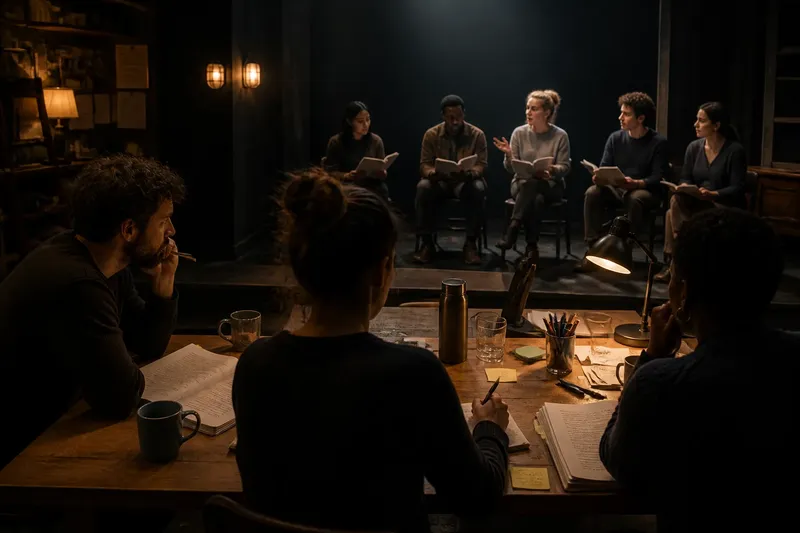
A first read-through of a script is most useful when the company treats it as a map of questions, not a verdict on the writing. The voices in the room can reveal where pace changes, relationships are hard to follow or a passage seems unclear; none of those first impressions, on its own, settles what the scene means or what must be changed.
The distinction matters because a script sounds different when spoken aloud. A sentence that looks effortless on the page may tangle in the mouth, while a quiet exchange may acquire force through timing. The read-through gives the writer and company a shared first encounter with the play in sound and sequence. Its value lies in noticing, comparing and recording responses before committing to an explanation.
What can a first read-through tell you?
It can show where attention shifts, where a listener needs more information and where an actor’s delivery seems to alter the apparent relationship between characters. These are observations about the encounter between text and listeners. They are not automatic evidence that a line, scene or character is wrong.
For pace, listen for changes rather than simply asking whether the play feels fast or slow. A long pause may create pressure; a rapid run of exchanges may make a conflict feel evasive or playful. Note where energy seems to gather or drain, then check what is happening in the text at that point: an entrance, a new piece of information, a change of subject or a repeated idea.
For relationships, notice what the dialogue lets a listener infer. Does a reply sound like reassurance, avoidance, a challenge or an attempt to regain control? If different listeners read the same exchange differently, that disagreement may point to productive ambiguity. It may also reveal that an essential connection is not yet legible. The next task is to identify which possibility the play supports, not to vote for the most popular reading.
For unclear passages, separate unfamiliarity from confusion. A first hearing offers no chance to scan back over a sentence, so a dense explanation may be difficult to absorb even when its wording is clear on the page. Conversely, listeners may understand each word but not know why the information matters. Mark the point where comprehension slips and describe the kind of uncertainty: wording, reference, sequence or dramatic purpose.
Which way of listening suits the room?
A company can use a read-through in more than one way. The best approach depends on whether the immediate need is an overall sense of the play, a focused account of audience comprehension or evidence about the dialogue itself. These approaches can be combined, but giving each a distinct purpose helps prevent a first reaction from becoming a premature instruction.
What does a continuous read-through reveal?
A continuous reading keeps the play’s sequence intact, making it easier to notice broad changes in pace, mood and attention. It suits a company meeting the script as a whole, particularly when scenes depend on information gathered earlier. Its limitation is that a listener who misses one detail may carry that uncertainty into later scenes.
In this approach, readers aim for a clear, unforced delivery rather than a polished performance. Avoid stopping to solve each moment while the play is still moving. Listeners can mark a page or keep a brief note of where their attention wandered, but discussion is more useful once everyone has reached the end and can place that response in context.
When is a listener-focused reading useful?
A listener-focused read-through asks someone who is not interpreting the script to record what they understand, expect and cannot follow. It suits a writer or director concerned with whether essential information reaches an audience without requiring a private explanation from the company. The listener should describe the point of uncertainty in their own words rather than suggest a line change straight away.
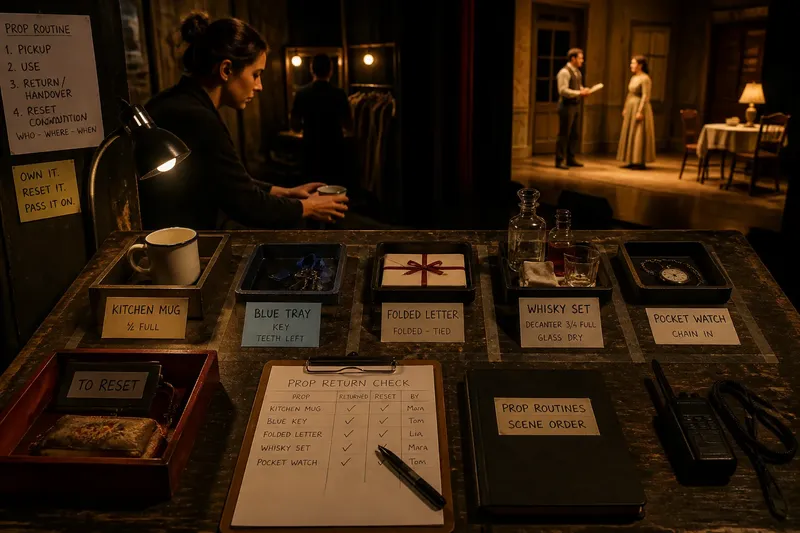
For instance, imagine a company reading a scene in which Mara says, “You kept it.” After the reading, one listener notes that they cannot tell whether “it” refers to a letter mentioned earlier or a key introduced in the scene. The useful next question is whether the surrounding dialogue makes either reference clear, or whether the uncertainty is an intentional part of the exchange. A note about the listener’s confusion preserves the observation; an immediate rewrite would skip the diagnosis.
What can a dialogue-focused reading show?
A dialogue-focused reading attends to the language as it is spoken: breath, interruption, sentence shape, repeated words and turns that feel difficult to enter. It suits a passage where the company suspects that syntax or conversational rhythm is obscuring a character’s intention. It cannot decide on its own whether a difficult line is a problem; a deliberate verbal pattern can be challenging for a reason.
Readers should resist making every line sound natural in the same way. A character may speak in fragments, repeat a phrase or avoid answering directly. Record where the language creates effort, then ask whether that effort belongs to the character, the moment or the listener’s first encounter with the text.
How should the company handle conflicting reactions?
Keep three things separate: what happened, what someone inferred and what they recommend. “The reply came after a pause” is an observation. “The character seemed afraid” is an interpretation. “Add a line explaining the fear” is a proposed change. Recording them separately gives the writer room to assess the recommendation without losing the original signal.
A simple shared page can use those three headings, with the page number or scene named beside each note. This is less like a scorecard than a map with several possible routes: the marks show where attention gathered, but the people responsible for the production still choose which path fits the play.
Look for patterns, but do not treat agreement as proof. If several listeners lose track at the same point, investigate the wording, sequence and context. If one reader hears a relationship in a surprising way, that response may still reveal an ambiguity worth considering. The aim is not to count reactions; it is to understand what in the script produced them.
What should the room do after the reading?
Choose a next action that matches the kind of question raised. Some observations need a page-level check; others need a later rehearsal context or a conversation with the writer. A first read-through can open those enquiries without requiring immediate edits.
- For a pace question: mark where energy appeared to change, then check whether the change follows an event, a shift in subject or the length of the exchange.
- For a relationship question: note the competing interpretations and identify which words or actions support each one.
- For an unclear passage: record what the listener could not identify, such as the person, object, time or reason being discussed.
- For difficult dialogue: mark the exact phrase and describe whether the difficulty came from breath, syntax, interruption or an unfamiliar reference.
- For a proposed change: retain the observation beside it, so the writer can judge whether the edit addresses the cause rather than only the first reaction.
Then decide whether to leave the note open, ask a clarifying question or explore it in a later reading. If the play contains a deliberate uncertainty, making it explicit may weaken the scene. If an audience needs information to follow a consequential action, a small adjustment may be worth exploring. The choice belongs to the creative process, informed by the purpose of the passage.
What questions do readers often ask about a first read-through?
Should actors perform the characters fully?
They can read with clear intention, but a first read-through need not imitate a finished production. A restrained delivery helps the company hear the script’s structure without mistaking a strong performance choice for a settled direction.
Should the writer explain confusing lines straight away?
Usually, it is more useful to let listeners finish and record what they understood before hearing an explanation. The writer can then compare the intended meaning with the response and decide whether the gap matters to the scene.
Is a pause always a sign that the pace is slow?
No. A pause can make a decision, concealment or change of attention more legible. Record what seemed to happen during it before deciding whether it needs to be shorter, longer or left alone.
When should a note become a script change?
When the people responsible for the text have understood the problem the note describes and agree that a change serves the play. A first-read response is a reason to investigate, not an instruction that must be followed.
How do you choose the right approach?
Choose a continuous reading when the main question concerns the play’s overall movement. Choose a listener-focused reading when you need to know what an audience can follow without explanation. Choose a dialogue-focused reading when spoken language itself is the point of concern. If more than one question matters, keep the purposes distinct and make room for each response rather than expecting one reading to answer everything.
Whichever approach the company uses, the first read-through is a map because it records where attention, uncertainty and interpretation gather. It does not decide which route the production must take. A careful note—specific about what was heard, open about what it means—gives the next conversation a firmer starting point than a verdict delivered too soon.