How a Proscenium Stage Shapes the Audience’s View
Learn how a proscenium stage frames action and affects sightlines, scenery and actor movement, with practical ways to assess the view before staging.
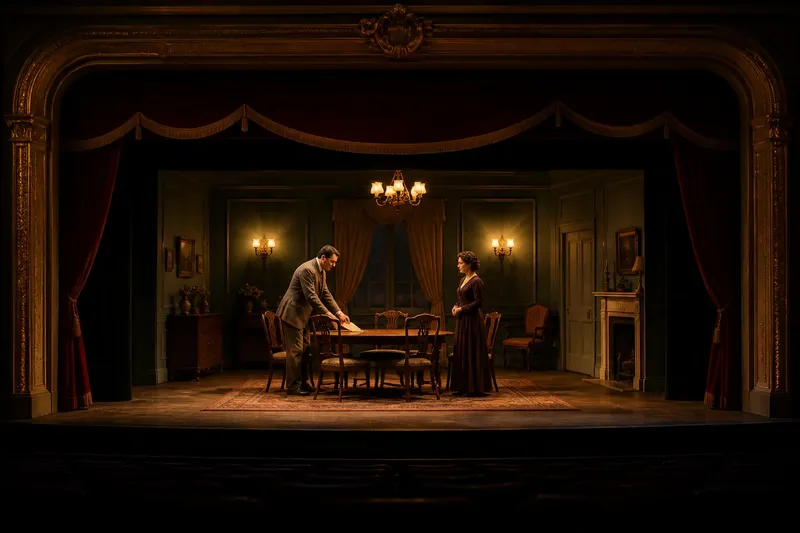
A proscenium stage gives the audience a dominant view from the front, so sightlines should shape decisions about scenery, movement and focus. The proscenium is the opening between the auditorium and the playing space; it may be an ornate arch, a plain portal or an opening defined by curtains and masking.
What does a proscenium stage frame?
The audience sits on one side of the opening and watches the action beyond it. The frame can help establish the boundary of the imagined world, much as a picture frame separates an image from the wall around it. The analogy has limits: a theatre view changes as performers move, and spectators do not all see it from the same angle.
The playing space lies behind the opening, while the auditorium is in front. Curtains, masking legs and borders can conceal wings and equipment, but they also affect what is visible from different seats. A proscenium stage therefore presents a front-facing view without giving every spectator an identical sightline.
On a thrust stage, the acting area extends towards spectators, who view it from several sides. In an arena, the audience surrounds the playing area. These arrangements call for different choices about scenery and performer orientation; the proscenium’s main design reference is the view from the auditorium.
How did the proscenium arrangement develop?
In parts of Europe, theatre buildings developed permanent stages with an opening that separated the playing space from the auditorium. The history varies by place and period, so it is better understood as a gradual development than as a single invention or a straightforward replacement of other stage forms.
The opening provided a clear boundary for arranging scenery seen from the front. Painted flats, backdrops and other separate pieces could suggest a room, street or landscape from the audience’s viewpoint. Masking could hide some edges and backstage activity, though the result depended on the theatre’s layout and the production’s design.
Proscenium stages remain one option among several. The form does not require naturalistic scenery: a production can expose stage machinery, use an open playing space or make the boundary itself part of the staging.
What changes for performers and designers?
A front-facing audience view can make façades, furniture and painted perspective read clearly from the auditorium. It can also make a set look incomplete from the wings or from a sharp side angle. Designers usually plan the visible structure around the agreed audience view rather than build every element as a complete room.
Lighting can direct attention within the opening, while curtains and masking define its edges. These choices interact: shifting a masking leg may reveal a wing, change a side sightline or expose a lighting position. The director, designer and stage management team need to coordinate such changes with entrances and scene transitions.
Actors must keep the scene readable without turning every line into a direct address. Opening the body slightly towards the auditorium may help spectators see a face, while a diagonal can preserve the relationship between two performers. The useful position depends on the scene and on which seats need to see the action.
How can you assess a proscenium stage before staging?
Check the view from several parts of the auditorium, including side seats and any balcony. Compare what is visible with the script’s entrances, important objects and key actions. Record observations on a ground plan or a simple sketch from the audience’s viewpoint, then use them to make specific staging decisions.
- Opening and masking: Check where the arch, curtains and masking define the visible boundary. If a wing or piece of equipment is visible, then adjust the masking or relocate the item; otherwise, keep the current arrangement.
- Side sightlines: Check whether seats at either side can see the planned doorway, furniture and actor positions. If an important element is blocked, then shift or angle it; otherwise, retain its position.
- Playing area: Check which floor area is visible and which routes lead into the wings or crossover. If an entrance route crosses a visible action or creates a collision risk, then reroute or restage it; otherwise, keep the route.
- Audience focus: Check whether spectators can see the face, object or action that carries the scene’s main information. If it is unclear from the side or rear seats, then change the actor’s position, light or timing; otherwise, preserve the focus.
- Set plan: Check the ground plan against a sketch or model viewed from the auditorium. If the furniture or scenery hides an essential action, then revise the layout before rehearsal; otherwise, use the planned arrangement.
- Concealed information: Check whether the arch or masking hides anything the audience needs to understand. If it does, then move the action into view or alter the reveal; otherwise, keep the concealment.
Say you are planning a dining-room scene in an invented production. On the ground plan, a table sits close to the stage-left wall, and the script requires an actor to place a letter on it. A sketch from the auditorium shows that the wall blocks the letter from the side seats. You move the table towards the centre and angle the placement along a diagonal; the revised sketch shows the hand and letter more clearly, though the table is less close to the wall. The decision is to favour a readable action over that part of the room’s layout.
What do people ask about a proscenium stage?
Does a proscenium stage need an arch?
No. The defining feature is the opening between auditorium and playing space, not an ornate arch. Curtains, masking or a simple rectangular portal can establish the same front-facing arrangement.
Why do actors sometimes face the audience?
Opening the body towards the auditorium can make an actor’s face and speech easier to follow. It is a choice rather than a rule; performers and directors still need to serve the scene’s relationships and the available sightlines.
Can a proscenium stage feel intimate?
Yes. The stage arrangement does not dictate emotional distance. Restrained scenery, focused lighting and detailed performance can create a close effect while the audience remains beyond the opening.
How does a proscenium differ from a thrust stage?
A proscenium stage presents most action towards the auditorium, whereas a thrust extends into the audience and is viewed from several sides. This affects where scenery can stand and how performers share their attention.
What is the proscenium stage useful for?
A proscenium stage is a way to organise attention, not an instruction to make every production look like a painting. It can support controlled reveals, detailed scenery or a deliberately open playing space. Understanding how the proscenium stage frames action helps a company decide whether to work with the boundary or make it part of the theatrical effect.
Before fixing the design, return to the audience’s actual view. If an important action is hidden from a section of the auditorium, moving an object or adjusting an entrance may clarify the scene. The architecture sets the frame; the company decides what the audience can see within it.